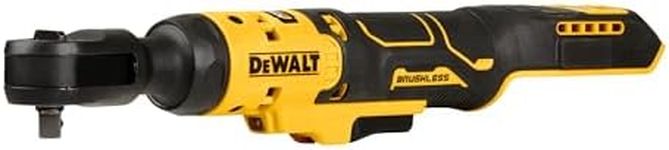
Buying Guide for the Best Cordless Ratchet Wrench
Choosing the right cordless ratchet wrench can make your mechanical tasks much easier and more efficient. These tools are great for working in tight spaces where a traditional ratchet might be cumbersome. When selecting a cordless ratchet wrench, it's important to consider several key specifications to ensure you get the best fit for your needs. Understanding these specs will help you make an informed decision and find a tool that suits your specific requirements.TorqueTorque is the amount of twisting force the wrench can apply. This is important because it determines how easily the wrench can tighten or loosen bolts. Torque is measured in foot-pounds (ft-lbs) or Newton-meters (Nm). For light-duty tasks, a torque of around 30-40 ft-lbs is sufficient. For medium-duty tasks, look for 40-60 ft-lbs. Heavy-duty tasks may require 60 ft-lbs or more. Choose a torque level based on the types of jobs you plan to tackle.
Battery VoltageBattery voltage indicates the power output of the wrench. Higher voltage typically means more power and longer run times. Common voltages for cordless ratchet wrenches are 12V, 18V, and 20V. A 12V wrench is usually adequate for light to medium tasks, while 18V and 20V models are better for more demanding jobs. Consider the voltage based on the intensity and duration of your work.
Battery CapacityBattery capacity, measured in ampere-hours (Ah), determines how long the battery will last on a single charge. Higher capacity batteries will allow you to work longer without needing to recharge. For occasional use, a battery with 2.0 Ah might be sufficient. For more frequent or intensive use, look for batteries with 4.0 Ah or higher. Choose a battery capacity that matches your work habits and the duration of your tasks.
SpeedSpeed, measured in revolutions per minute (RPM), indicates how fast the wrench can turn. Higher speeds can make quick work of fastening or loosening bolts, but may be harder to control for precision tasks. Typical speeds range from 150 to 300 RPM. For general use, a mid-range speed of around 200 RPM is usually sufficient. If you need more control for delicate tasks, look for models with variable speed settings.
Head SizeThe head size of the ratchet wrench affects its ability to fit into tight spaces. Smaller heads are better for accessing confined areas, while larger heads may provide more strength and durability. Common head sizes are 1/4 inch, 3/8 inch, and 1/2 inch. Choose a head size based on the typical size of the bolts and the space constraints of your work area.
WeightThe weight of the wrench can impact how comfortable it is to use, especially for extended periods. Lighter wrenches are easier to handle and reduce fatigue, but may offer less power. Heavier wrenches can be more powerful but may be tiring to use for long durations. Consider the weight based on your physical strength and the length of time you plan to use the tool.
ErgonomicsErgonomics refers to how comfortable and easy the wrench is to use. Look for features like a comfortable grip, balanced weight distribution, and easy-to-reach controls. Good ergonomics can reduce strain and increase efficiency, especially during long tasks. Choose a wrench that feels comfortable in your hand and suits your working style.