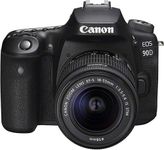
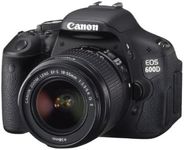
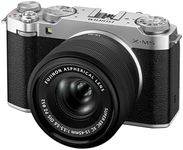
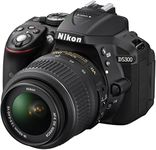
Buying Guide for the Best Dslr Cameras For Beginners
Choosing a DSLR camera as a beginner can be an exciting journey into the world of photography. DSLRs offer great image quality, versatility, and control over your shots. When selecting a camera, consider what you want to achieve with your photography, whether it's capturing family moments, landscapes, or starting a new hobby. Understanding the key specifications will help you make an informed decision that suits your needs and preferences.Sensor SizeThe sensor size in a DSLR camera is crucial because it affects the image quality and depth of field. Larger sensors, like full-frame sensors, capture more light and detail, which is ideal for low-light conditions and achieving a shallow depth of field. APS-C sensors are smaller but still offer excellent image quality and are more affordable. As a beginner, consider what type of photography you want to pursue; if you're interested in landscapes or portraits, a larger sensor might be beneficial, but for general photography, an APS-C sensor is a great starting point.
MegapixelsMegapixels refer to the resolution of the camera's sensor, determining how much detail the camera can capture. Higher megapixels mean more detail, which is useful for large prints or cropping images without losing quality. However, more megapixels don't always mean better images, especially if the sensor size is small. For beginners, a camera with around 16-24 megapixels is usually sufficient for most types of photography, providing a good balance between image quality and file size.
ISO RangeISO range indicates the camera's sensitivity to light, allowing you to shoot in various lighting conditions. A wider ISO range means better performance in low-light situations, but higher ISO settings can introduce noise into your images. As a beginner, look for a camera with a decent ISO range, such as 100-6400, which will give you flexibility in different lighting environments without compromising too much on image quality.
Autofocus SystemThe autofocus system in a DSLR camera helps you achieve sharp focus quickly and accurately. A good autofocus system is essential for capturing moving subjects or shooting in challenging conditions. Cameras with more autofocus points and advanced tracking features offer better performance. As a beginner, consider a camera with a reliable autofocus system that suits your needs, whether you're interested in sports photography, wildlife, or everyday snapshots.
Lens CompatibilityLens compatibility is important because it determines the range of lenses you can use with your camera. DSLRs typically have a wide variety of lenses available, from wide-angle to telephoto, allowing you to expand your photography skills. As a beginner, start with a camera that offers a good selection of affordable lenses, such as a standard zoom lens, which is versatile for different types of photography. As you grow in your photography journey, you can invest in more specialized lenses.
Manual ControlsManual controls allow you to adjust settings like aperture, shutter speed, and ISO, giving you creative control over your photography. These controls are essential for learning and experimenting with different techniques. As a beginner, choose a camera that offers easy-to-use manual controls, so you can gradually learn how to use them effectively and improve your skills over time.
Size and WeightThe size and weight of a DSLR camera can affect how comfortable it is to carry and use, especially for extended periods. Larger cameras may offer more features but can be cumbersome, while smaller models are more portable but might have fewer advanced options. Consider your lifestyle and how often you'll be carrying the camera; if you plan to travel or shoot on the go, a lighter, more compact model might be preferable.