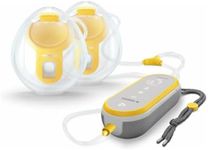
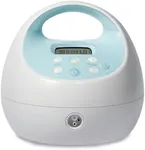
Buying Guide for the Best Hospital Grade Breast Pumps
Choosing the right hospital-grade breast pump can be a crucial decision for new mothers who need to express milk efficiently and comfortably. Hospital-grade breast pumps are designed to be more powerful and durable than regular pumps, making them ideal for frequent use or for mothers who have difficulty with milk production. When selecting a breast pump, it's important to consider several key specifications to ensure you find the best fit for your needs.Suction StrengthSuction strength refers to the power of the pump to extract milk from the breast. This is important because stronger suction can help stimulate milk production and make the pumping process quicker and more efficient. Suction strength is usually measured in millimeters of mercury (mmHg). Pumps with higher suction strength (around 250-300 mmHg) are ideal for mothers who need to pump frequently or have low milk supply, while lower suction strength (below 250 mmHg) may be sufficient for occasional use or for mothers with a good milk supply.
Cycle SpeedCycle speed is the rate at which the pump cycles between suction and release. This is important because a faster cycle speed can mimic the natural sucking rhythm of a baby, making the pumping process more comfortable and effective. Cycle speed is typically measured in cycles per minute (CPM). Pumps with higher cycle speeds (around 60-80 CPM) are ideal for mothers who need to express milk quickly or have limited time, while lower cycle speeds (below 60 CPM) may be more comfortable for extended pumping sessions.
Double Pumping CapabilityDouble pumping capability refers to the ability of the pump to express milk from both breasts simultaneously. This is important because double pumping can save time and help increase milk production by stimulating both breasts at once. Pumps with double pumping capability are ideal for mothers who need to pump frequently or have limited time, while single pumping may be sufficient for occasional use or for mothers who prefer to pump one breast at a time.
PortabilityPortability refers to how easy it is to transport and use the pump outside of the home. This is important for mothers who need to pump while traveling or at work. Portable pumps are typically lightweight and come with a carrying case or built-in battery for convenience. If you need to pump on the go, look for a pump that is compact and easy to carry, while larger, stationary pumps may be more suitable for home use.
Noise LevelNoise level refers to how loud the pump is during operation. This is important because a quieter pump can be more discreet and comfortable to use, especially in public or shared spaces. Noise level is usually measured in decibels (dB). Pumps with lower noise levels (below 50 dB) are ideal for mothers who need to pump in quiet environments, while higher noise levels (above 50 dB) may be acceptable for home use where noise is less of a concern.
Ease of CleaningEase of cleaning refers to how simple it is to clean and maintain the pump parts. This is important because regular cleaning is necessary to ensure hygiene and prevent contamination. Pumps with fewer parts and dishwasher-safe components are easier to clean and maintain. If you need a pump that is quick and easy to clean, look for models with minimal parts and clear cleaning instructions, while more complex pumps may require more time and effort to clean.