Buying Guide for the Best Iphone Lenses
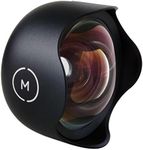
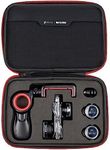
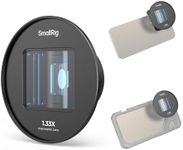
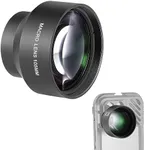
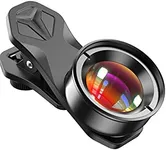
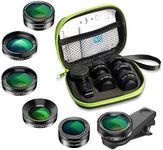
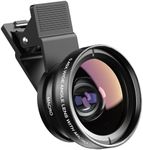
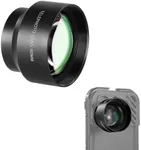
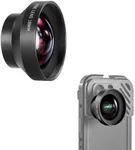
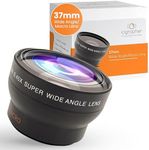
Choosing the right iPhone lens can significantly enhance your photography experience. Whether you're a professional photographer or a hobbyist, understanding the key specifications of iPhone lenses will help you make an informed decision. Here are the main aspects to consider when selecting an iPhone lens.Lens TypeThe type of lens determines the kind of photos you can take. Common types include wide-angle, telephoto, macro, and fisheye lenses. Wide-angle lenses are great for landscapes and group photos, telephoto lenses are ideal for capturing distant subjects, macro lenses are perfect for close-up shots of small objects, and fisheye lenses create a unique, distorted effect. Choose a lens type based on the kind of photography you enjoy.
MagnificationMagnification refers to how much closer the lens can make the subject appear. This is particularly important for telephoto and macro lenses. Higher magnification is useful for capturing fine details from a distance or getting extreme close-ups. If you need to capture distant subjects or tiny details, look for lenses with higher magnification. For general photography, standard magnification will suffice.
ApertureAperture is the opening in the lens through which light enters. It is measured in f-stops (e.g., f/1.8, f/2.8). A lower f-stop number means a larger aperture, allowing more light to enter, which is beneficial in low-light conditions and for achieving a shallow depth of field (blurry background). If you often shoot in low light or want to create professional-looking portraits with blurred backgrounds, choose a lens with a larger aperture.
Lens MaterialThe material of the lens affects its durability and image quality. High-quality glass lenses provide better clarity and less distortion compared to plastic lenses. If you prioritize image quality and longevity, opt for lenses made from high-quality glass. For casual use, plastic lenses can be a more affordable and lightweight option.
CompatibilityNot all lenses are compatible with every iPhone model. Ensure that the lens you choose is designed to fit your specific iPhone model. Check the manufacturer's compatibility list or product description to avoid any issues. Compatibility is crucial for ensuring that the lens attaches securely and functions properly with your device.
Build QualityBuild quality refers to how well the lens is constructed. Look for lenses with sturdy construction, preferably made from metal or high-quality plastic, to ensure they can withstand regular use. Good build quality also means the lens will fit securely on your iPhone without wobbling. If you plan to use the lens frequently or in various environments, prioritize build quality to ensure durability.
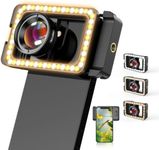
Ease of UseEase of use includes how simple it is to attach and detach the lens, as well as how intuitive it is to use. Some lenses come with clip-on attachments, while others may require a specific case. Consider how quickly you can switch lenses and how user-friendly the design is. If you prefer convenience and quick changes, look for lenses that are easy to attach and use.