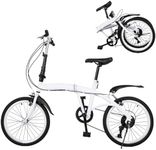
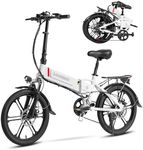
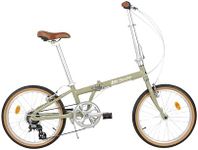
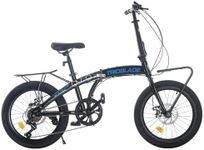
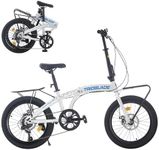
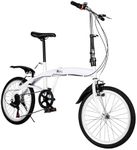
Buying Guide for the Best Lightest Folding Bike
Choosing the right folding bike involves considering various factors that will affect your riding experience and convenience. Folding bikes are designed to be compact and portable, making them ideal for commuters, travelers, or anyone with limited storage space. When selecting a folding bike, it's important to focus on the weight, folding mechanism, wheel size, frame material, and gearing options. Each of these specifications will influence how easy the bike is to carry, how it performs on different terrains, and how comfortable it is to ride. Understanding these key specs will help you find a folding bike that best suits your lifestyle and needs.WeightWeight is a crucial factor for folding bikes, as it determines how easy the bike is to carry and transport when folded. Lighter bikes are easier to handle, especially if you need to carry them on public transport or store them in small spaces. Folding bikes typically range from ultra-light models weighing around 15 pounds to heavier ones up to 30 pounds. If you plan to carry your bike frequently, opt for a lighter model. However, lighter bikes may sacrifice some durability or stability, so consider your balance between portability and performance.
Folding MechanismThe folding mechanism is the system that allows the bike to collapse into a compact form. This is important because it affects how quickly and easily you can fold and unfold the bike. Common mechanisms include half-fold, vertical fold, and triangle hinge. Half-fold bikes are generally easier to fold and unfold, while vertical fold bikes are more compact. Triangle hinge designs offer a balance between ease of use and compactness. Choose a mechanism that suits your daily routine and storage needs, ensuring it is intuitive and quick to operate.
Wheel SizeWheel size impacts the ride quality and portability of a folding bike. Smaller wheels, typically 16 to 20 inches, make the bike more compact and easier to store, but they may offer a less smooth ride on rough surfaces. Larger wheels, around 24 to 26 inches, provide better stability and comfort, especially for longer rides, but they can make the bike bulkier when folded. Consider where you'll be riding most often; if it's mostly urban environments with smooth roads, smaller wheels might suffice. For mixed terrains, larger wheels could be more beneficial.
Frame MaterialThe frame material affects the bike's weight, durability, and ride quality. Common materials include aluminum, steel, and carbon fiber. Aluminum frames are lightweight and resistant to rust, making them a popular choice for folding bikes. Steel frames are heavier but offer excellent durability and a smoother ride. Carbon fiber is the lightest and strongest option, but it tends to be more expensive. Choose a frame material based on your priorities: if weight is your main concern, aluminum or carbon fiber might be best; if durability is key, consider steel.
Gearing OptionsGearing options determine how well the bike can handle different terrains and inclines. Folding bikes can have single-speed or multiple gears. Single-speed bikes are simpler and lighter, ideal for flat urban areas. Bikes with multiple gears offer more flexibility and are better suited for varied terrains and hilly areas. Consider your typical riding environment; if you encounter hills or need to cover longer distances, a bike with multiple gears will provide a more comfortable ride. For short, flat commutes, a single-speed bike might be sufficient.