Buying Guide for the Best Lightweight Mobility Scooter
Choosing a lightweight mobility scooter involves understanding your personal mobility needs and how you plan to use the scooter. Consider where you will be using it most often, whether indoors, outdoors, or both, and how often you will need to transport it. Lightweight scooters are designed for easy transport and maneuverability, making them ideal for those who need a portable solution. However, they may have limitations in terms of speed, range, and weight capacity compared to heavier models. It's important to balance these factors to find a scooter that fits your lifestyle and mobility requirements.Weight CapacityWeight capacity refers to the maximum weight the scooter can safely support, including the user and any additional items they may carry. This is crucial for ensuring the scooter operates safely and efficiently. Lightweight scooters typically have a lower weight capacity compared to heavier models. They usually range from 250 to 350 pounds. To choose the right weight capacity, consider your body weight and any items you might carry regularly, such as groceries or a backpack. Ensure the scooter's capacity exceeds your total weight to maintain performance and safety.
RangeThe range of a mobility scooter indicates how far it can travel on a single battery charge. This is important for planning trips and ensuring you don't run out of power unexpectedly. Lightweight scooters often have a range between 8 to 15 miles. If you plan to use the scooter for short trips around town or indoors, a lower range may suffice. However, if you need to travel longer distances or use the scooter throughout the day, opt for a model with a higher range to avoid frequent recharging.
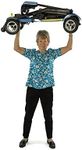
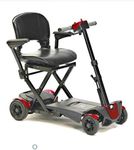
PortabilityPortability refers to how easy it is to transport the scooter, including its ability to fold or disassemble. This is a key feature for those who need to take their scooter in a car or store it in a small space. Lightweight scooters are designed to be easily portable, often featuring foldable frames or quick disassembly. Consider how often you will need to transport the scooter and whether you have the strength or assistance to lift it. Choose a model that you can comfortably manage, whether it folds compactly or breaks down into lighter parts.
SpeedSpeed indicates how fast the scooter can travel, usually measured in miles per hour (mph). While not the most critical factor, speed can affect how quickly you reach your destination. Lightweight scooters typically have a top speed of 4 to 6 mph. If you plan to use the scooter in crowded areas or indoors, a lower speed may be safer and more manageable. For outdoor use or longer distances, a higher speed might be more convenient. Consider your comfort level with speed and the environments where you'll be using the scooter.
Turning RadiusThe turning radius is the smallest circular turn the scooter can make, which affects its maneuverability, especially in tight spaces. This is particularly important for indoor use or navigating crowded areas. Lightweight scooters often have a tighter turning radius, making them easier to handle in confined spaces. If you plan to use the scooter indoors or in areas with narrow pathways, look for a model with a smaller turning radius. For outdoor use, a slightly larger turning radius may be acceptable if it offers other benefits like stability.