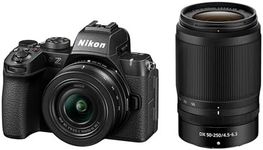
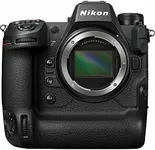
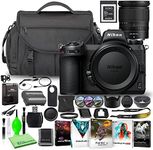
Buying Guide for the Best Nikon Mirrorless Cameras
When choosing a Nikon mirrorless camera, it's important to consider what you plan to use the camera for, whether it's professional photography, casual shooting, or video production. Mirrorless cameras are known for their compact size, electronic viewfinders, and the ability to interchange lenses, making them versatile tools for various types of photography. Understanding the key specifications will help you select a camera that best fits your needs and preferences.Sensor SizeThe sensor size in a camera determines the amount of light that is captured, which affects image quality, depth of field, and low-light performance. Common sensor sizes in Nikon mirrorless cameras include full-frame and APS-C. Full-frame sensors are larger and typically offer better image quality and performance in low light, making them ideal for professional photographers or those who want the highest quality images. APS-C sensors are smaller, making the cameras more compact and affordable, suitable for hobbyists or those who prioritize portability.
MegapixelsMegapixels refer to the resolution of the camera's sensor, indicating how many millions of pixels the sensor can capture. Higher megapixels mean more detail in your images, which is important for large prints or cropping. However, more megapixels also mean larger file sizes. For most users, a range of 20-30 megapixels is sufficient for high-quality images. If you are a professional or need to print large photos, you might consider a camera with higher megapixels.
Autofocus SystemThe autofocus system in a camera determines how quickly and accurately it can focus on a subject. Nikon mirrorless cameras often feature advanced autofocus systems with multiple focus points and tracking capabilities. If you plan to shoot fast-moving subjects, such as in sports or wildlife photography, look for a camera with a fast and reliable autofocus system. For general photography, a standard autofocus system with good face and eye detection will suffice.
Video CapabilitiesVideo capabilities in a camera refer to the quality and features available for recording video. Nikon mirrorless cameras can offer 4K or even 8K video recording, along with features like slow motion, time-lapse, and external microphone support. If video is a significant part of your work, consider a camera with high-resolution video capabilities and additional features that enhance video production. For casual video recording, basic 4K capabilities should be adequate.
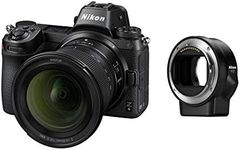
Lens CompatibilityLens compatibility is crucial as it determines the range of lenses you can use with your camera. Nikon mirrorless cameras use the Z-mount, which offers a growing selection of lenses. Consider the types of photography you are interested in and ensure that there are suitable lenses available for those needs. If you already own Nikon lenses, you may want to check if they are compatible with the mirrorless system, possibly with an adapter.
Battery LifeBattery life indicates how many shots or how much video you can capture on a single charge. Mirrorless cameras generally have shorter battery life compared to DSLRs due to their electronic viewfinders and displays. If you plan to shoot for extended periods or travel without access to charging, look for a camera with longer battery life or consider purchasing extra batteries. For occasional use, standard battery life should be sufficient.
Build Quality and ErgonomicsBuild quality and ergonomics refer to the camera's construction and how comfortable it is to hold and use. A well-built camera with weather sealing is important for durability, especially if you plan to shoot in challenging environments. Ergonomics are subjective, so it's important to handle the camera to see if it feels comfortable in your hands and if the controls are intuitive. Consider your shooting style and environment when evaluating these aspects.