Buying Guide for the Best Telescopes
Choosing the right telescope can open up a whole new world of stargazing and celestial exploration. The key to finding the best telescope for you is understanding the different specifications and how they align with your observing goals. Whether you're interested in viewing planets, deep-sky objects, or just want a general-purpose telescope, knowing what to look for will help you make an informed decision.ApertureAperture refers to the diameter of the telescope's main optical component, which can be a lens or a mirror. It is the most crucial specification because it determines how much light the telescope can gather. More light means brighter and clearer images, allowing you to see fainter objects. Aperture sizes can range from small (around 60mm) to large (over 200mm). For beginners, a telescope with an aperture of 70mm to 100mm is often sufficient for viewing the moon and planets. If you're interested in deep-sky objects like galaxies and nebulae, consider a larger aperture of 150mm or more.
Focal LengthThe focal length of a telescope is the distance from the lens or mirror to the point where the telescope forms an image. It affects the magnification and field of view. A longer focal length provides higher magnification, which is great for viewing planets and the moon. However, it also means a narrower field of view, which can make it harder to locate objects. Shorter focal lengths offer a wider field of view, making them better for observing star clusters and nebulae. Choose a focal length based on what you want to observe: longer for detailed planetary views, shorter for wide-field deep-sky observations.
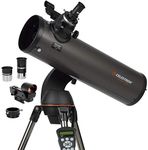
MagnificationMagnification is how much larger a telescope can make an object appear. It is determined by dividing the focal length of the telescope by the focal length of the eyepiece. While high magnification might seem appealing, it's not always better. Too much magnification can lead to blurry images if the telescope's aperture isn't large enough to support it. A good rule of thumb is to use 50x magnification per inch of aperture. For general use, having a range of eyepieces to provide different magnifications is beneficial, allowing you to adjust based on what you're observing.
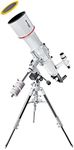
Mount TypeThe mount is what holds the telescope and allows it to move. There are two main types: altazimuth and equatorial. Altazimuth mounts move up-down and left-right, making them intuitive and easy to use, ideal for beginners. Equatorial mounts are aligned with the Earth's axis, allowing for smoother tracking of celestial objects as they move across the sky, which is useful for astrophotography. Choose an altazimuth mount for simplicity and ease of use, or an equatorial mount if you're interested in more advanced tracking and photography.
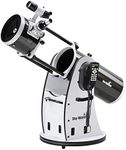
PortabilityPortability refers to how easy it is to transport and set up the telescope. This is important if you plan to take your telescope to different locations for stargazing. Smaller telescopes are generally more portable and easier to set up, making them great for beginners or those who travel frequently. Larger telescopes, while offering better views, can be cumbersome and require more effort to transport and assemble. Consider how often and where you plan to use your telescope when deciding on the right balance between size and portability.